Asphalt Cutting Blades
Asphalt eats blades. The sand and aggregate in hot-mix pavement is brutally abrasive — it wears down the steel core right below the diamond segments and the segments just pop off. We solved that with carbide undercut protection pins that shield the weld joint from slurry erosion. These blades run on walk-behind flat saws and handheld cut-off equipment for highway paving, parking lot cuts, and early-entry green concrete joints. Hard-bonded diamond segments resist the rapid wear that soft, sandy materials cause. If you're cutting asphalt or green concrete without undercut protection, you're burning money.
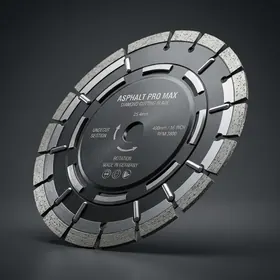
Undercut Protection & Core Engineering
Mechanism of Action
Asphalt is composed of soft, highly abrasive aggregates bound by bitumen. Slicing asphalt generates a massive volume of abrasive sand slurry. While our concrete cutting blades handle cured slabs, asphalt requires specific protection. This slurry flows along the cut pathway and erodes the steel core directly below the diamond segments, leading to premature segment loss (undercutting). To prevent this failure, our asphalt blades feature carbide-embedded undercut protection segments or deep drop segments that sweep the slurry out of the cut, preserving the steel core bond.
Operational Parameters
Because green concrete (concrete that has set but not fully cured) is highly abrasive, these blades are also the industry standard for making early-entry expansion relief cuts. They prevent aggregate raveling and core warping under continuous dry or wet operation.
Target Material Applications
- ✓ Hot-mix asphalt paving, highways, parking lots, and driveway beds
- ✓ Green concrete (freshly poured concrete within 4 to 24 hours of curing)
- ✓ High-abrasion sand slurry environments (soft, abrasive cutting zones)
- ✓ Early-entry concrete contraction joint cutting to prevent stress cracks
- ✓ Undercut protection required to prevent segment loss from abrasive slurry
Available Sizes & Direct Pricing
| Diameter Specification | Segment & Specs | Direct Pricing | Availability & Orders |
|---|---|---|---|
| 7" Professional Blade | 10mm x .125" Sintered Segments | $69.99 ● In Stock | Order Direct → |
| 12" Professional Blade | 10mm / 12mm x .125" (3.25mm) Sintered Segments | $289.99 ● In Stock | Order Direct → |
| 14" Professional Blade | 12mm / 15mm x .125" (3.25mm) Sintered Segments | $299.99 ● In Stock | Order Direct → |
| 16" Professional Blade | 12mm / 15mm x .140" (3.5mm) Sintered Segments | $399.99 ● In Stock | Order Direct → |
| 18" Professional Blade | 12mm / 15mm x .140" (3.5mm) Sintered Segments | $499.99 ● In Stock | Order Direct → |
| 20" Professional Blade | 10mm x .125" Sintered Segments | $599.99 ● In Stock | Order Direct → |
| 24" Professional Blade | 15mm x .165" (4.2mm) Sintered Segments | $699.99 ● In Stock | Order Direct → |
📦 Wholesale Contractor Bulk Packs
Save on high-frequency utility cutting. Get factory-direct bulk rates on 5-Packs and 10-Packs. Call us direct for contractor discounts.
Blade RPM & Depth of Cut Calculator
Calculate optimal operating parameters for your Asphalt Cutting Blades.
Material Matching & Bond Selection Matrix
Pairing the correct bond hardness with your aggregate is essential for achieving optimal cutting speeds and maximizing blade lifespan.
| Job Site Material | Recommended Blade Type | Why This Spec Matters |
|---|---|---|
| Hot-mix asphalt road | 14–18" Hard bond + undercut | Carbide pins prevent segment loss from abrasive sand slurry erosion |
| Green concrete joints | 12–14" Hard bond | Early-entry relief cuts within 4–24 hours to prevent stress cracking |
| Parking lot / driveway | 14" Hard bond asphalt | Fast cuts with straight tracking on thin asphalt overlays |
| Bridge deck / runway | 18–24" Heavy-duty asphalt | Deep cut on thick overlays — continuous wet operation for heat management |
Verified Contractor Field Reports
Direct feedback from commercial cutting contractors across Southern California running Quality Diamond Blades on job sites.
"40-mile resurfacing project on the 14. Ran QDB's 18-inch with undercut protection — didn't lose a single segment. Old blades would pop by mile 5."
"Green concrete joint cutting in 105-degree heat in Lancaster. These blades track straight and don't warp. That matters at 200 cuts a day."
Frequently Asked Questions
What causes diamond segment undercutting on asphalt blades?
Undercutting is caused by abrasive sand and rock slurry grinding against the steel core at the segment attachment point. Our integrated carbide drop-segments sweep this slurry out to protect the weld joint.
Can you use an asphalt blade to cut cured concrete?
No, using an asphalt blade (which has an extra-hard metal bond) on hard cured concrete will cause the blade to glaze over, overheat, and stop cutting because the concrete aggregate is not abrasive enough to wear down the hard segment matrix.
What is green concrete and why does it require an asphalt blade?
Green concrete is concrete that has set but not fully cured (typically within 4 to 24 hours of pouring). It is highly abrasive because the sand grains have not bonded fully to the cement matrix. It requires a hard-bonded blade with undercut protection to resist premature wear.
What is the difference between hot pressed and laser welded asphalt blades?
Hot pressed asphalt cutting blades use heat and pressure to sinter the diamond segments directly to the steel core, creating a strong mechanical bond suited for continuous wet cutting on walk-behind saws. Laser welded blades fuse segments with a precision laser beam, creating a heat-resistant joint that allows both wet and dry operation — ideal for handheld cut-off saws and field work in hot conditions.
What is the best asphalt blade for highway repair and road construction?
For highway repair and municipal road construction, use a 14-inch or larger asphalt cutting blade with carbide undercut protection and hard-bonded diamond segments. Walk-behind flat saws with water attachments provide the cleanest relief cuts for highway expansion joints, bridge deck overlays, and airport runway maintenance.
Technical Guides & Engineering Field Articles
In-depth contractor guides, safety standards, and operational parameters for Asphalt Cutting Blades.
Laser-Welded Asphalt & Green Concrete Blades: Preventing Undercutting and Core Wear
Discover how laser-welded diamond blades with deep drop-segment protection prevent abrasive slurry undercutting on asphalt roads and green concrete slabs.
Utility Trenching Blades: Fast Cuts in Asphalt and Sub-Base Aggregates
Optimize utility trenching efficiency with dual-purpose asphalt/concrete diamond blades featuring drop-segment core protection.
Combating Abrasive Undercutting in High-Sand Concrete Mixes
Learn how high-sand concrete mixes and green concrete cause rapid core undercutting, and how hard-bond drop-segment blades eliminate failure.
Equip Your Crew With Contractor-Grade Blades
Contact our Santa Clarita technical specialists to discuss bulk contractor discounts, custom arbor sizes, and emergency job site delivery.
Call (661) 592-1022