Masonry Cutting Blades
Brick, block, pavers, refractory — if it's masonry, these blades cut it. We run sintered diamond segments in either segmented rim or keyhole slot configurations depending on the material. Table masonry saws, handheld cut-off saws, gas-powered Stihl and Husqvarna machines — they all take our standard arbor sizes. The key thing most guys don't realize: clay bricks and cinder blocks need completely different bond hardnesses. A blade that rips through red clay will burn out on abrasive cinder block in half a day. We match the bond to your material so you're not wasting money.
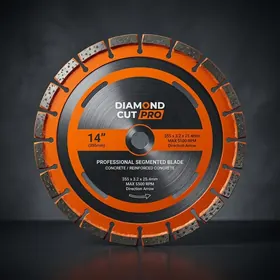
Bond Hardness & Abrasive Wear Mapping
Mechanism of Action
Masonry materials vary wildly in abrasiveness and density. Medium-hard clay bricks require soft cobalt-bronze bonded matrices to continually shed dull diamonds and expose sharp cutting edges, much like the precision bonds used in our diamond blades for cured concrete. Cinder blocks, composed of abrasive volcanic cinders or sand aggregates, erode the metal matrix extremely fast. For blocks, we utilize hardened iron-alloy bonds that resist immediate erosion, keeping the diamond crystals secured until they are fully consumed. This matrix tuning ensures the blade does not wear down prematurely.
Operational Parameters
SCAQMD Rule 403 particulate rules dictate that masonry cutting on commercial jobsites in the Los Angeles basin must utilize wet-saw setups. Wet table cutting controls dangerous respirable silica dust while lubricating the steel core to eliminate noise vibration and prevent structural warping during continuous operation.
Target Material Applications
- ✓ Clay brick, refractory brick, and engineered masonry veneers
- ✓ Concrete Masonry Units (CMU) and lightweight cinder blocks
- ✓ Interlocking landscape pavers, retaining walls, and architectural columns
- ✓ Limestone, sandstone, slate, and natural building stone
- ✓ Tile backer boards and dense fiber-cement structural sheets
Available Sizes & Direct Pricing
| Diameter Specification | Segment & Specs | Direct Pricing | Availability & Orders |
|---|---|---|---|
| 12" Professional Blade | 10mm / 12mm x .110" (2.8mm) Sintered Segments | $289.99 ● In Stock | Order Direct → |
| 14" Professional Blade | 12mm / 15mm x .125" (3.2mm) Sintered Segments | $299.99 ● In Stock | Order Direct → |
| 16" Professional Blade | 10mm x .125" Sintered Segments | $399.99 ● In Stock | Order Direct → |
| 18" Professional Blade | 10mm x .125" Sintered Segments | $499.99 ● In Stock | Order Direct → |
| 20" Professional Blade | 15mm x .155" (3.9mm) Sintered Segments | $599.99 ● In Stock | Order Direct → |
| 24" Professional Blade | 10mm x .125" Sintered Segments | $699.99 ● In Stock | Order Direct → |
📦 Wholesale Contractor Bulk Packs
Save on high-frequency utility cutting. Get factory-direct bulk rates on 5-Packs and 10-Packs. Call us direct for contractor discounts.
Blade RPM & Depth of Cut Calculator
Calculate optimal operating parameters for your Masonry Cutting Blades.
Material Matching & Bond Selection Matrix
Pairing the correct bond hardness with your aggregate is essential for achieving optimal cutting speeds and maximizing blade lifespan.
| Job Site Material | Recommended Blade Type | Why This Spec Matters |
|---|---|---|
| Hard clay brick | Segmented, soft bond | Drops dull diamonds fast on hard material — prevents glazing and overheating |
| Cinder block / CMU | Segmented, hard bond | Abrasive cinder aggregate eats soft bonds — hard bond resists rapid erosion |
| Landscape pavers | Segmented, medium bond | Good balance of cutting speed and chip-free edges for decorative hardscape work |
| Limestone / sandstone veneer | Continuous rim, soft bond | Clean edges on soft natural stone — wet cutting for dust suppression |
Verified Contractor Field Reports
Direct feedback from commercial cutting contractors across Southern California running Quality Diamond Blades on job sites.
"Cut 400+ clay pavers for a Beverly Hills estate job on one 14-inch blade. No chipping, no glazing. Bond is dialed in."
"We do CMU block work all over the Valley. These last twice as long on cinder block as the big-box brands we used to buy."
Frequently Asked Questions
What is the best blade bond for cutting hard clay pavers?
Hard clay pavers require a soft metal bond blade. The soft bond wears away rapidly enough to drop dull diamonds and expose new cutting facets, preventing blade glazing and ensuring clean, chip-free cuts.
Can I run a masonry table saw dry?
While laser-welded blades can cut dry, running wet is highly recommended for masonry table saws to control silica dust under SCAQMD rules and maximize blade life by cooling the segment bond during deep passes.
How do I recognize a glazed masonry blade?
A glazed blade will spark, emit high-pitched squeals, and refuse to cut. To restore cutting speed, run the blade through an abrasive block or soft brick to grind away the glazed metal bond and expose fresh diamonds.
What is the best diamond blade for cutting brick with a circular saw?
For circular saw brick cutting, use a segmented diamond blade with laser-welded segments in a 7-inch or 10-inch diameter. The segmented rim provides aggressive cutting with good debris clearance, and the laser-welded bond prevents segment loss during the high-RPM operation of standard contractor circular saws.
Can I use a brick cutting blade on a standard angle grinder?
Yes, 4.5-inch and 7-inch diamond brick cutting blades mount directly on standard angle grinders. Use a segmented rim blade for aggressive dry cutting or a continuous rim for cleaner edges on face brick. Always ensure the blade RPM rating matches or exceeds your grinder's no-load speed.
Technical Guides & Engineering Field Articles
In-depth contractor guides, safety standards, and operational parameters for Masonry Cutting Blades.
Turbo Tuckpointing Blades: Heavy-Duty Mortar Removal and Joint Chasing
Guide to selecting wide-segment 1/4" and 3/8" tuckpointing diamond blades for fast brick mortar raking, joint cleaning, and crack chasing.
How to Prevent Diamond Blade Glazing on Hard Refractory Brick and Dense Stone
Learn why diamond blades glaze over when cutting dense non-abrasive materials, and how to dress glazed blades using abrasive brick or sandstone.
Masonry Saw Blades for Firebricks, Refractory Materials, and Kiln Linings
Select ultra-soft bond diamond blades for cutting brittle firebrick, high-alumina refractory brick, and industrial furnace linings.
Equip Your Crew With Contractor-Grade Blades
Contact our Santa Clarita technical specialists to discuss bulk contractor discounts, custom arbor sizes, and emergency job site delivery.
Call (661) 592-1022